UK property wisdom is out of date
Growing up in the UK, I heard plenty of sayings about property. Many people still believe them and take them at face value, despite the fact that they no longer apply.
“Get on the ladder”
The basic idea is to buy a cheap property as soon as you can, and use the equity it builds to trade up to a family home. There are two reasons this advice has aged badly.
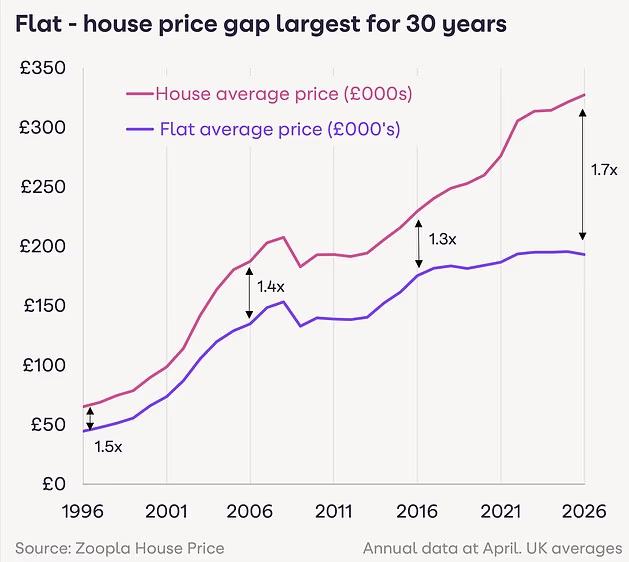
First, flats are traditionally the first rung of the ladder, and the value of houses has grown far quicker than flats over the last decade. In England, the average flat was worth about £218,000 in July 2016 and about £217,000 in July 2026, a drop in cash terms. Over the same period, semi-detached houses rose from about £216,000 to £292,000, a gain of roughly 35%.
So buying a flat over the past decade hasn’t got people closer to the next rung of the ladder. In fact it may have trapped them at the bottom in one of the numerous leasehold scandals.
Second, the cost and difficulty of buying and selling in the UK (albeit slightly better in Scotland) means you don’t want to move more often than necessary. Solicitors, estate agents, surveys and stamp duty all add a large fixed price to every move. After your first purchase, you lose first-time buyer stamp duty relief, and you’ll usually have to sell and buy at the same time as part of a stressful chain.
The ladder metaphor rushes you into buying something you will soon outgrow, and is in my mind the #1 worst piece of property advice you often hear.
“Safe as houses” / “Bricks and mortar”
Another common belief is that property is a safe and stable investment. I don’t really like thinking of a home as an investment, but let’s run with it.
As an investment, a home is a single, illiquid asset usually bought with heavy borrowing. Leverage is great in a fast rising market, but it really hurts in a falling one, where owners can end up owing more than the value of the property (“negative equity”).
Beyond market crashes, there are risks specific to a property that can make it hard or impossible to sell, usually through no fault of the owner, such as:
- Leasehold issues (escalating service charges, ground rent, cladding)
- Flood risk
- Legal and title issues
- Neighbour disputes
Recently, UK property hasn’t kept pace with inflation. The average home went from £255,535 in July 2021 to £273,000 in July 2026, a 7% rise, while consumer prices rose 28% over the same period, meaning a real terms fall of around 17%.
Meanwhile, a lot of other investments like index funds have performed far better, so money tied up in a deposit or mortgage overpayments has carried a high opportunity cost - although this is easy to say in hindsight.
See also: “House prices double every ten years”, “Your house is your pension”
“Rent is dead money”
When comparing renting to buying, people tend to miss out some of the biggest costs of property ownership. A fair comparison also accounts for all the dead money when owning:
- Buying costs
- Mortgage interest and fees
- Maintenance and repairs
- Buildings insurance
- Service charges
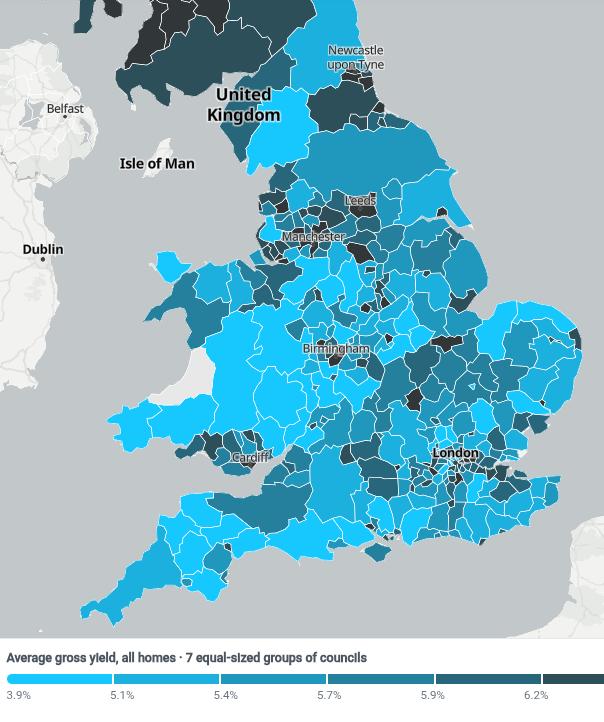
It’s useful to plug real-world numbers into a rent vs buy calculator. Despite recent high increases in rents, the costs are often closer than you’d expect. I have found the results to heavily depend on the area, and the case for renting is strongest in places with low rental yields.
Even when renting costs more, it isn’t dead money. It buys the flexibility to move at short notice if a job or relationship demands it, means you’re not on the hook for repairs and maintenance, and acts as a kind of insurance against something going badly wrong with the property.
See also: “You’re just paying off your landlord’s mortgage”
“Location, location, location”
The thinking is that location matters more than anything else when it comes to property value, so you should buy in the best area you can. You can extend, renovate, and redecorate a house, but you can’t move it. While true, this is unhelpful for two reasons.
First, location is always a trade-off, and the best locations command a huge premium. Whether that’s worth the extra financial strain, and sacrifice of other features you’d like in a property, is not clear.
Second, areas move up and down over time. In the year to July 2026, the North East rose 4.9% while London fell 3.3%. Fifteen years ago it was the other way around: in the year to July 2011, London was the only region where prices rose (1.3%), while the North East fell 8.8%.
“Buy the worst house on the best street”
Supposedly, every street has a price ceiling, and by buying the “doer-upper” nobody else wants, and renovating it, there is the opportunity to bring it up to the price ceiling and gain a lot of value.
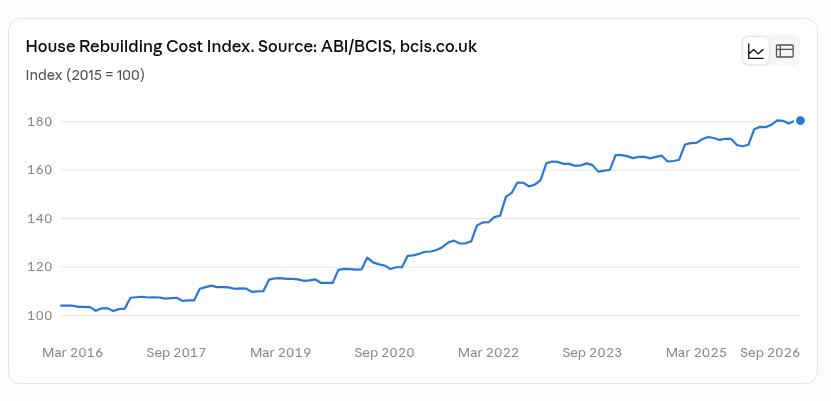
The problem is that everyone has heard this advice, so the potential tends to be priced in. At the same time, the cost of doing up a house has skyrocketed. Rebuilding costs for homes rose around 55% between January 2020 and summer 2026, according to the BCIS House Rebuilding Cost Index, far faster than the growth in house prices.
Many sellers haven’t caught up with how expensive renovation is now, so tired, dated homes are still not discounted enough.
Conclusion
Most of these sayings come from a time of steadily rising prices and cheap borrowing, or when prices were low relative to wages even if borrowing was dearer. That era has run its course, and yet the received wisdom is still part of the British psyche.
That doesn’t mean I think that buying is a bad idea. It’s great to have security of tenure, to be able to decorate to your tastes, and it usually makes financial sense if you’re settling down for a long period. Just run your own numbers, treat anything that estate agents say with scepticism, and don’t feel pressured into buying any property.